
Xpür® Spark One Technologies for Still and Sparkling Wines – A Cleaner Cork for a Better Bottle

Setting a New Standard for Wine Closures

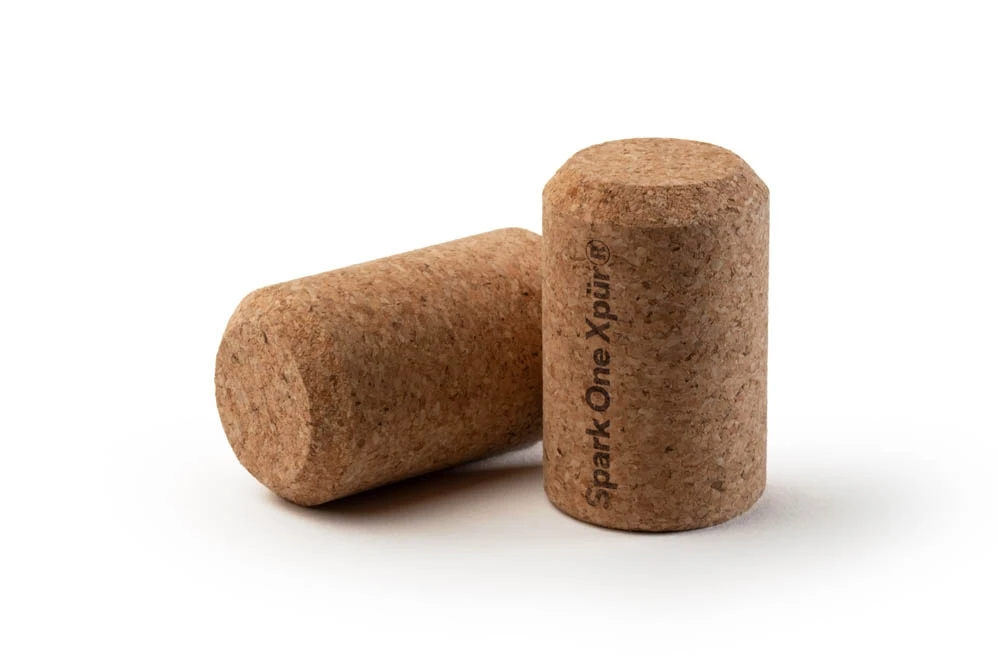
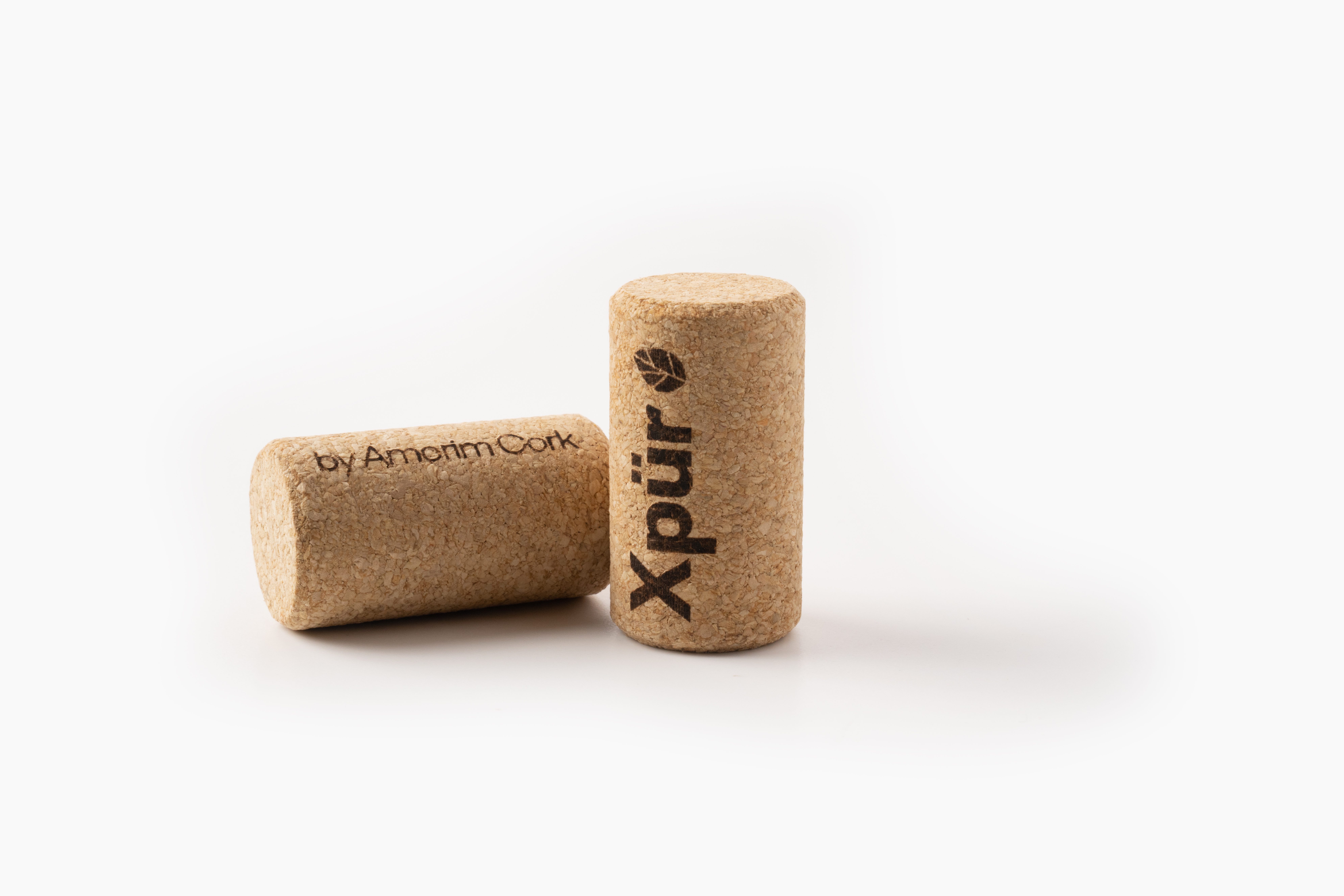
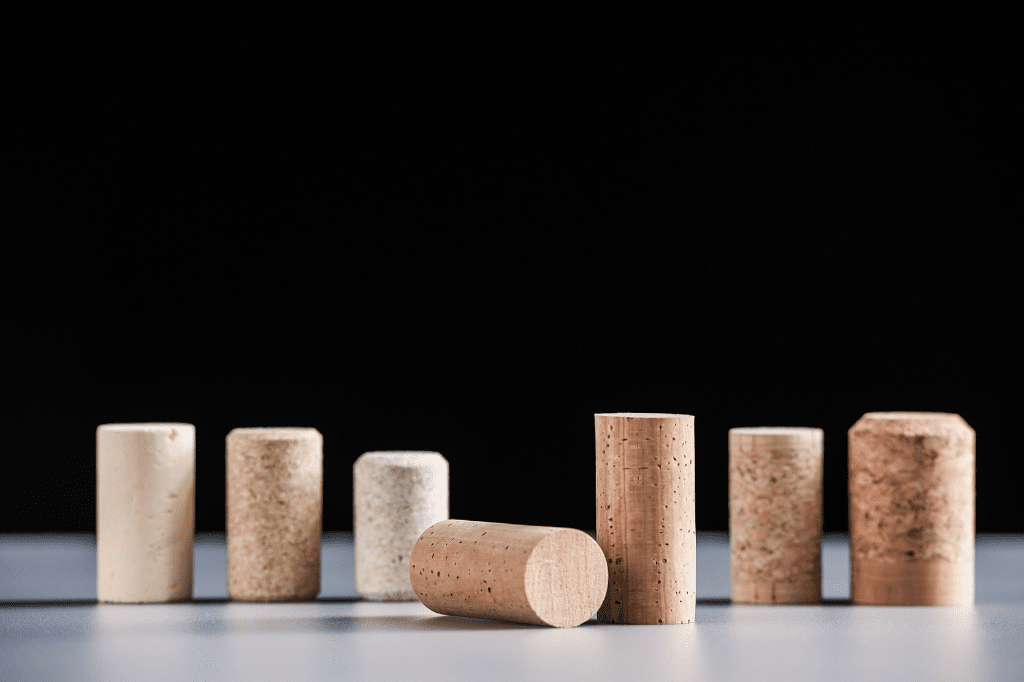
In the world of wine, precision matters. For decades, the industry has relied on natural cork to deliver flavour preservation, sensory purity, and optimal ageing. However, not all cork is created equal. Enter Xpür® Spark One, Amorim’s innovative approach to micro-granulated cork closures that represents the next generation of technical corks for both still and sparkling wines.

The Science Behind Xpür® Spark One

Xpür® Spark One is engineered using a proprietary supercritical CO extraction process — a method that guarantees TCA-free performance while maintaining the natural integrity of cork. This advanced technology not only removes TCA (trichloroanisole) but also preserves the essential structure of cork, ensuring its elasticity, sealing capability, and sensory neutrality remain intact.

The process begins with natural cork that is granulated, purified using CO₂ under high pressure, and reformed with precise control over oxygen ingress. This meticulous process results in closures that are consistent, reliable, and perfectly suited for winemakers seeking the highest standards of quality.

Xpür® Spark One for Still Wines

When it comes to still wines, oxygen management is key. Too much oxygen can lead to premature oxidation, while too little can stunt the wine’s development. Xpür® Spark One offers:

  • Predictable Oxygen Control: Allows for optimal ageing without the risk of over-oxidation.
  • Sensory Purity: Zero risk of cork taint, preserving the wine’s delicate aromas and flavours.
  • Batch Consistency: Perfect for large-scale bottlings where uniformity is crucial.

Xpür® Spark One for Sparkling Wines

The demands of sparkling wine are even greater. From secondary fermentation to bottle maturation, pressure stability and flavour preservation are paramount. Xpür® Spark One is engineered to withstand up to 6 ATMs of pressure, ensuring that the bubbles stay crisp and vibrant. Key benefits include:

  • Pressure Resistance: Maintains bottle integrity during storage and ageing.
  • Aroma Scalping Prevention: Protects the wine’s effervescence and aromatic profile.
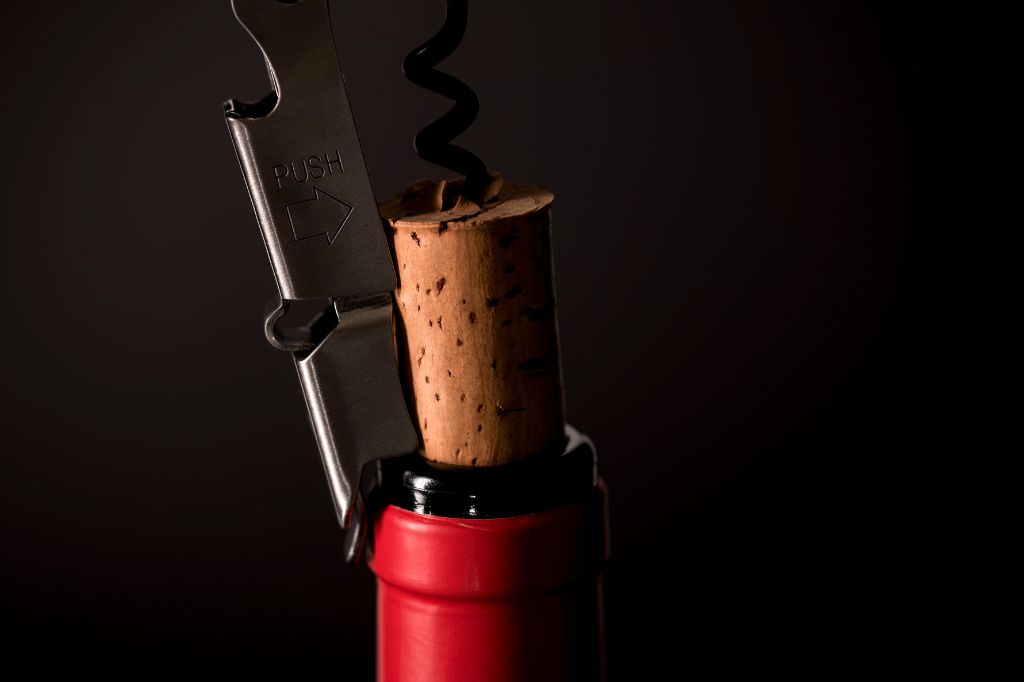
  • Perfect Pop: Every bottle opens with that signature sound that signals quality.

Sustainability at Its Core

Xpür® Spark One isn’t just about performance; it’s about responsible winemaking. Every Xpür® Spark One closure is made from sustainably harvested cork, utilising a chemical-free purification process. This supports carbon sequestration and aligns with global sustainability goals — making it the ideal choice for producers looking to minimise their environmental footprint.

At Amorim, we believe the best wines deserve the best closures. WithXpür® Spark One, we’re setting the standard for quality, sustainability, and consistency in the world of cork.
Xpür® vs. Its Competitors – Redefining Micro-Granulated Cork

Setting the Benchmark for Micro-Granulated Cork Closures

In the competitive world of wine closures, Xpür® by Amorim is setting a new standard for micro-granulated cork technology. As the demand for sustainable, high-performance closures increases, Xpür® is emerging as the leader in purity, consistency, and environmental responsibility.

The Technology Behind Xpür®

At the heart of Xpür® is supercritical CO extraction — a state-of-the-art purification process that guarantees:

  • TCA-Free Performance: Complete elimination of trichloroanisole, ensuring sensory purity in every bottle.
  • Sensory Neutrality: Xpür® maintains the wine’s true aromatic profile without interference.
  • Batch Consistency: Precise oxygen control for predictable ageing and reliable quality across large-scale production.

Unlike other micro-granulated corks that rely on aggressive chemical treatments, Xpür® uses CO₂ extraction, which is non-toxic and environmentally friendly. This results in a closure that preserves the natural structure of cork, maintaining its elasticity and sealing power.

Sustainability at the Core

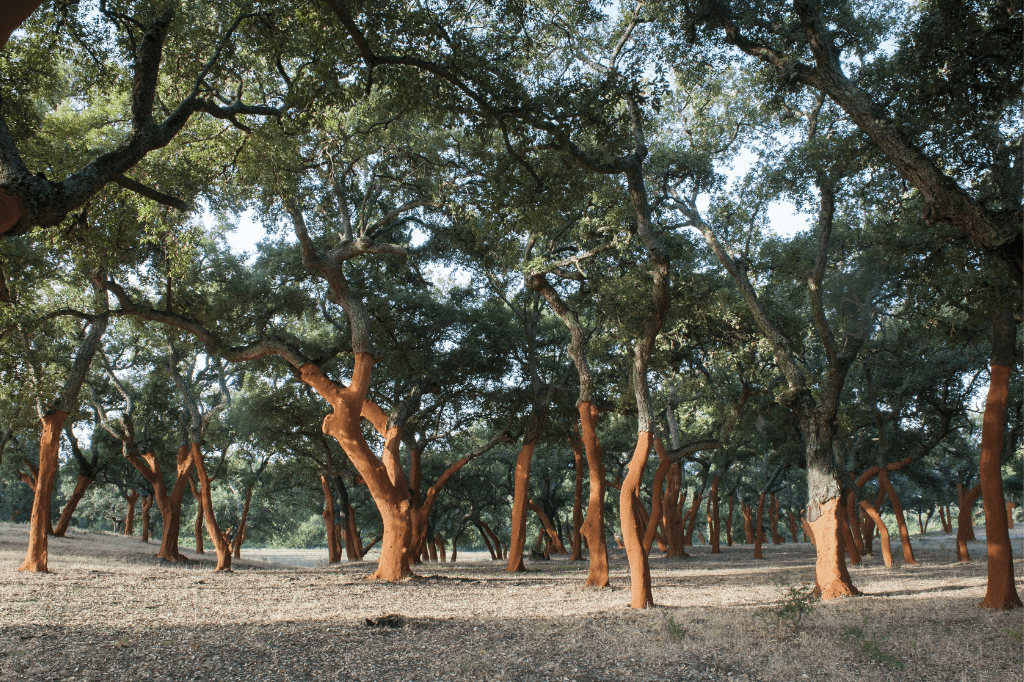
Amorim’s commitment to sustainability is reflected in Xpür®’s production process. All cork is sustainably harvested from cork oak forests that not only sequester carbon but also support biodiversity. Amorim’s approach reduces the carbon footprint of every bottle sealed with Xpür®, contributing to a more sustainable wine industry.

The Xpür® Advantage

While alternative closures may offer consistency, Xpür® delivers that and more:

  • Chemical-free purification
  • Natural cork elasticity for perfect sealing
  • Proven ageing potential for both still and sparkling wines

When it comes to performance, reliability, and sustainability, Xpür® stands alone.

Microplastic-Free Closures? Cork Delivers a Natural Advantage

Introduction

In recent years, microplastics have become a growing concern across all industries – and wine packaging is no exception. While the focus often falls on bottles, labels or foils, the closure itself can contribute to microplastic pollution if synthetic or plastic-based alternatives are used.

For winemakers looking to reduce their environmental footprint and respond to changing consumer expectations, cork presents a clear and natural alternative.

What Are Microplastics and Why Do They Matter?

Microplastics are tiny plastic particles (less than 5mm in size) that are shed from synthetic materials. They accumulate in our waterways, soil and food systems, posing potential risks to ecosystems and human health.

In packaging, products made from plastic, plastic-bonded materials or synthetic compounds often release these particles through degradation, heat or friction.

Cork: Naturally Microplastic-Free

Cork, by contrast, is a 100% natural material derived from the bark of the cork oak tree. Unlike synthetic closures, cork does not degrade into microplastics. Its cellular structure remains stable and intact, making it a safer and more sustainable packaging choice.

An independent analysis commissioned by Amorim Cork and conducted by Labocork, a certified laboratory, found that wine bottles sealed with Amorim cork stoppers showed no microplastic presence. This contrasts with bottles closed using synthetic or plastic-based alternatives, which showed measurable microplastic migration into the wine.

A Win for Wine and the Planet

Beyond environmental protection, using cork aligns with the growing consumer demand for cleaner, more sustainable products. As sustainability becomes a defining factor in purchasing decisions, microplastic-free packaging is no longer a niche concern – it’s a brand imperative.

Why It Matters for Producers

For winemakers, the choice of closure is not only about sealing the wine – it’s a statement about quality, provenance and environmental responsibility. Using a natural cork helps reinforce a producer’s commitment to sustainable practices and avoids unintended contributions to microplastic pollution.

Conclusion

Cork stoppers offer more than tradition – they provide modern benefits backed by science. In the face of increasing scrutiny over packaging materials, cork is a natural, renewable and microplastic-free solution that supports both wine integrity and environmental stewardship.

Protect the planet. Preserve the wine. Choose cork.

Xpür® by Amorim: Raising the Bar for Sustainable Wine Closures

In the world of wine, closures matter. At Amorim, we believe a cork should do more than seal a bottle – it should protect quality, support the planet, and drive progress. With Xpür®, our most advanced micro granulated cork technology, winemakers can now access a closure that is scientifically proven to mitigate climate change while ensuring performance precision.

The Carbon Storing Power of Cork

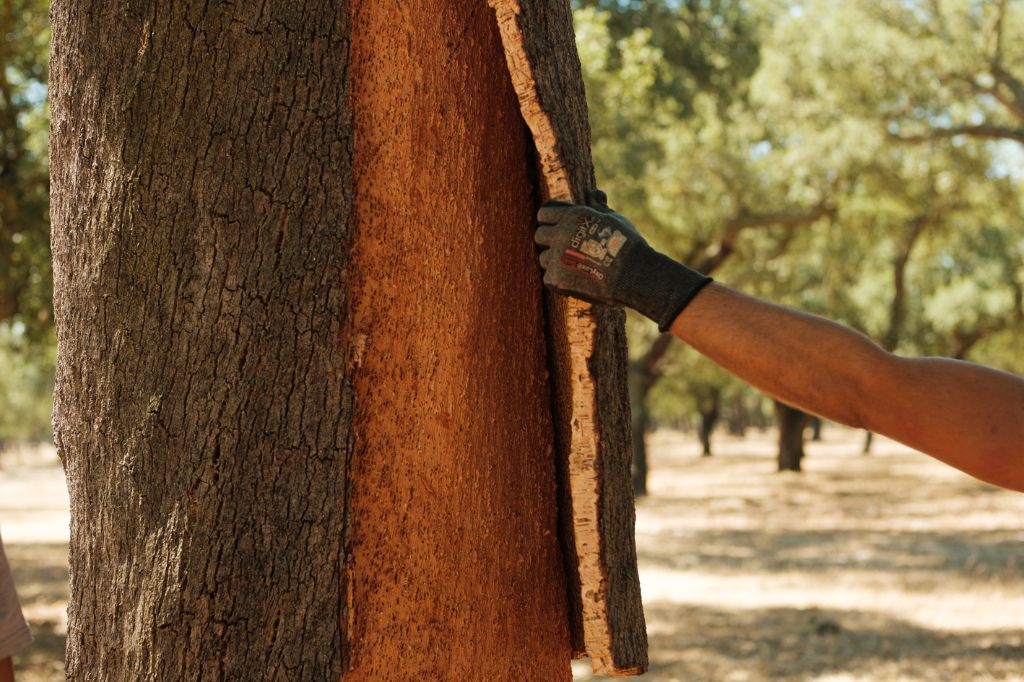
Cork is already known as one of the most sustainable raw materials on the planet. Harvested without harming the tree, it contributes to biodiversity, carbon sequestration and sustainable rural economies. Xpür® elevates this further.

According to a recent APCER certified life cycle study, each Xpür® stopper stores 34.75g CO₂e, measured using a cradle to gate assessment. This means the entire lifecycle – from cork oak forests through production and packaging – results in a net negative carbon footprint. It’s proof that better closures can mean better environmental outcomes.

Redefining Energy Efficiency

The Xpür® process isn’t just environmentally sound – it’s engineered for the future.
This 21st century evolution of traditional supercritical CO₂ extraction uses 75% less energy and 90% less CO₂ than previous technologies. The result is a cleaner, greener and more efficient production process.

Designed for Performance and Purity

Xpür® stoppers are used in our Neutrocork Xpür® and QORK lines – both delivering high sensory neutrality and physical consistency. Xpür® stoppers achieve ultra-low TCA levels (≤0.3 ng/L), helping protect wine from cork taint while maintaining natural compressibility and expansion for reliable bottling and ageing.

A Natural Fit for Sustainable Winemaking

Xpür® is proudly aligned with programs such as Sustainable Winegrowing Australia and Sustainable Winegrowing New Zealand, helping wineries meet rigorous environmental standards without compromising on closure integrity. With verified environmental data, winemakers can confidently demonstrate their own sustainability efforts to partners and consumers alike. 

The Data Behind the Claim

From forest to final product, Amorim’s commitment to transparency means we provide measurable data on each Xpür® stopper’s impact. The cradle to gate model offers deep insights into forestry practices, processing energy use, packaging and transportation – empowering winemakers to make fully informed packaging choices.

Conclusion

Xpür® isn’t just the most advanced technical cork Amorim has ever made – it’s a step forward for the entire industry. As climate challenges grow and consumers demand cleaner solutions, Xpür® helps wineries lead the change, bottle by bottle.

Let’s move winemaking forward sustainably.

Spark One Xpür® – Now Available in Australia & New Zealand

The Greenest Micro-Granulated Stopper for Sparkling Wines Has Arrived

A new era in sparkling wine closures has arrived in Australia and New Zealand. Spark One Xpür® is the latest innovation from Amorim, bringing winemakers the perfect combination of purity, performance, and sustainability.

Engineered for Effervescence

Sparkling wines require precision sealing to maintain their signature bubbles. Spark One Xpür® is treated with Amorim’s advanced Xpür® technology, which removes TCA and other volatile substances while preserving the natural elasticity of cork granules. The result? A high-performance micro-granulated stopper that ensures optimal pressure retention and sensory neutrality.

Why Spark One Xpür® Stands Out

  • Superior Pressure Retention – Protects the delicate effervescence of sparkling wines
  • Unmatched Sensory Purity – No off-flavours, just the wine as it was intended
  • Sustainable Innovation – The world’s greenest micro-granulated cork stopper
  • Seamless Uncorking – No breakage, crumbling, or particle release


Now Available for Australasian Wineries

For the first time, winemakers in Australia and New Zealand have access to Spark One Xpür®, offering a sustainable, reliable, and high-performance closure designed specifically for premium sparkling wines.

Find out more here.

Xpür® – The Future of Technical Cork in Winemaking

Revolutionising Wine Sealing with the World’s Greenest Micro-Granulated Cork

For years, winemakers have faced the challenge of TCA contamination, which can compromise the purity and aroma of wines. Now, Xpür®, Amorim’s latest breakthrough in technical cork technology, is setting a new benchmark in performance, sustainability, and sensory neutrality.

A New Standard in Technical Cork Purity

Xpür® uses supercritical fluid technology, a cutting-edge process that eliminates TCA and other volatile compounds, making cork taint a thing of the past. Unlike some competitors that rely on synthetic additives, this process preserves the integrity of cork granules, ensuring a perfect balance between tradition and innovation.

Xpür® vs. The Alternatives

While some alternatives use synthetic binding agents, Xpür® remains a micro-granulated cork stopper, delivering a cleaner, more sustainable solution. Amorim’s innovation ensures:

  • TCA Below Detectable Limits – 0.3 ng/L or less
  • Unmatched Sensory Purity – Preserves the original character of the wine
  • Sustainable & Eco-Friendly – The world’s greenest micro-granulated cork stopper
  • Optimised Oxygen Management – Ideal for long-term ageing and preservation

Why Australasian Winemakers Are Choosing Xpür®

In a market where quality and consistency are paramount, Australian and New Zealand winemakers are moving towards Xpür® for its superior performance and sustainability. Whether for boutique wineries or large-scale production, Xpür® offers the best of both worlds—technical excellence and environmental responsibility.

Experience the future of technical cork. 

Amorim Cork used in Rolls Royce record-breaking all-electric plane

Amorim Cork Composites, Corticeira Amorim’s business unit that develops products, solutions and applications for some of the most sophisticated industries in the world, is celebrating the successful test flight of a groundbreaking electric plane that used Amorim cork in its battery system.

The ‘Spirit of Innovation’ officially became the world’s fastest all-electric vehicle in January 2022, when speeds of 387.4mph reached during test flights in November 2021 were officially verified by the Federation Aeronautique Internationale – breaking three separate world speed records. It was the result of a long-term partnership between Rolls-Royce, YASA and Electroflight – a British aviation energy storage specialist and Amorim’s customer on this project.

Electroflight designed the entire powertrain and integrated battery system for the Spirit of Innovation, using three YASA 750 R axial-flux electric motors and more than 6,000 Murata VTC6 18650 NCA cylindrical cells. They needed to find a material for the battery case that would not only be structurally robust, but would also be light and extremely fire resistant.

Douglas Campbell, Technical Director for Electroflight, explained: “The battery case was an extremely challenging piece of engineering, as the entire powertrain is connected to the front of the aircraft. The battery case is therefore doing an extremely important job, not just providing containment in the case of a battery fire, but also keeping the front of the aircraft connected to the fuselage structure. On top of that, we had to keep weight to an absolute minimum, and ensure that the product used for the battery case was highly fire-resistant.”

Electroflight worked with Amorim Cork Composites to develop a fire-proofed agglomerate for the battery case internals made from cork lining. This unique invention, now patented, had the added benefit of being made from natural sustainable materials – a vital component given the overall objective of the ACCEL project: to accelerate aviation on the path to decarbonisation.

António Rios de Amorim, Chairman and CEO of Corticeira Amorim, said: “In the wake of COP26 last November, the need for electrification has never been clearer and aviation is one of the top priorities. It has been an honour to work with world-class businesses such as Electroflight and Rolls-Royce to further progress on the journey to aviation decarbonization, and the fact that we have created a new invention that could now help others down this path is extremely rewarding. We look forward to even more projects in this space that will champion the use of cork, one of nature’s most sustainable products.”

Douglas concluded: “This was an extremely successful project and we were pleased to partner with Amorim in bringing new innovations to market. Electroflight is looking forward to future work with Amorim to develop new technologies that will support the electrification and decarbonization of aviation.”

Pedro Cabrita Reis’ “The Three Graces”, now on display in Paris, is made of cork!

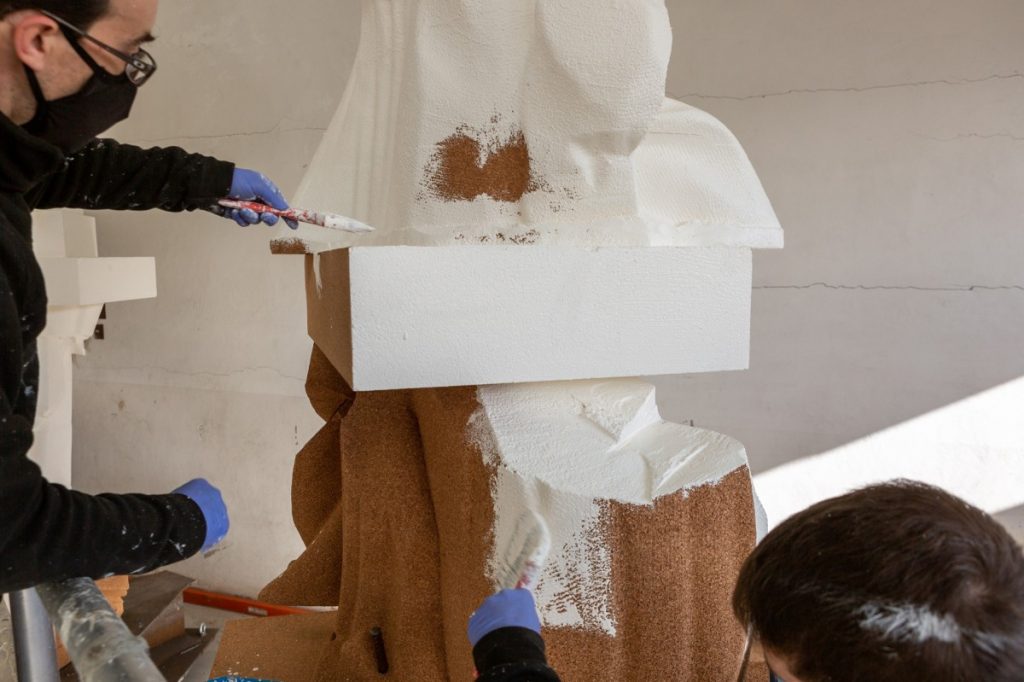
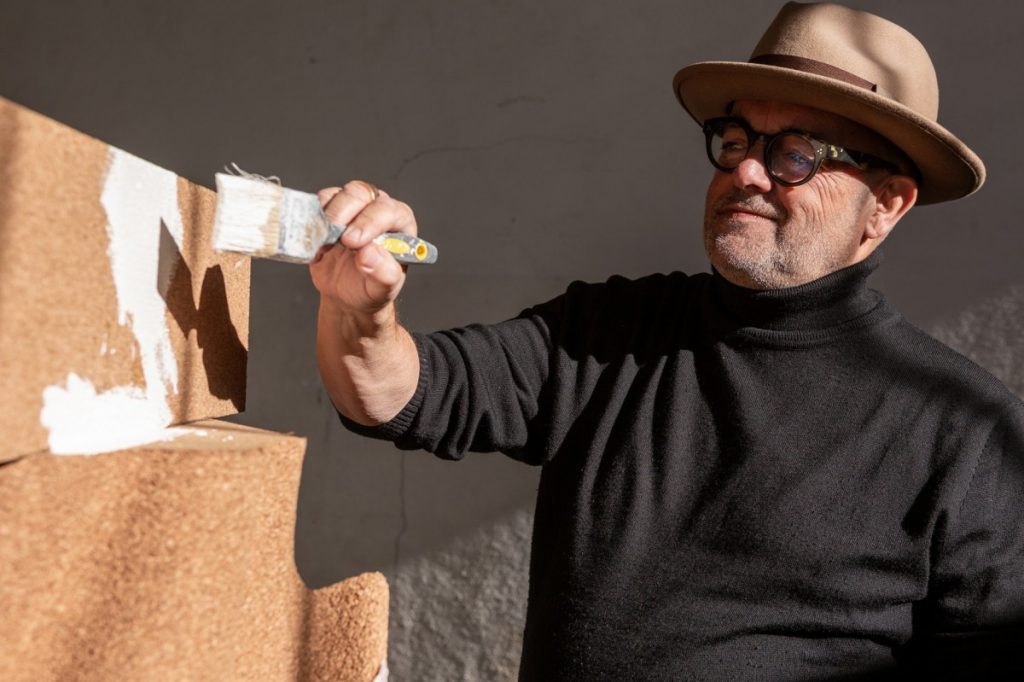
Cork from Corticeira Amorim was chosen by the artist, Pedro Cabrita Reis, to create his most recent international project: “The Three Graces”, a tribute to the remarkable work of classical antiquity, now on display in the Tuileries Garden, in Paris. Integrated within the 2022 France-Portugal Season, the multifaceted Portuguese artist was invited by Laurence des Cars, President of the Louvre Museum. His original work consists of three monumental autonomous elements, entirely made of cork, using a new reference specially designed for this purpose by Amorim Cork Composites – Corticeira Amorim’s Composite Cork Business Unit. Each sculpture, which was painted in a delicate shade of ivory white at the end of the creative process, weighs approximately 500 kilos, is about 4.50 meters high and is supported on an iron base, weighing 400 kilos. The total implantation has a 9-metre diameter.

The three anthropomorphic figures, which evoke deconstructed human forms, were concluded in Corticeira Amorim’s premises, which were transformed into Pedro Cabrita Reis’ ideal studio for a few weeks. The work began many months ago, based on multiple notes, a countless number of drawings and models based on religious statues purchased in souvenir shops. Once the models conceived by the artist were found, the objects were then scanned, transformed into a computer drawing and a robotic arm began to carve the cork blocks in a segmented manner. The sculptural triad finally took shape with the assistance of cutting-edge technology from a startup based in the University of Porto’s business incubator. Pedro Cabrita Reis marked the plane cuts in each volume and used the same cork blocks in their raw state to reinforce the disarticulation of each body.

Speaking about his use of this genuinely Portuguese raw material in this first creative adventure in the world’s most important museum, the Portuguese artist commented: “I really enjoyed making these works in cork, and I’m absolutely sure that this isn’t the last time that I will be using this material in my work”. He added: “Cork is a natural and sustainable product”. In relation to Corticeira Amorim’s involvement in the process, Pedro Cabrita Reis stated that “Amorim immediately demonstrated absolute availability and enthusiasm. For this new project they built a set of circumstances, of material logistics, of discussion about the structure. Amorim was an open, active and committed partner”.

Corticeira Amorim’s Chairman and CEO, António Rios de Amorim explains that the company has embraced its association with the project “The Three Graces”: “One of the best formulae for positioning cork as a raw material of excellence is its permanent connection to the creative, artistic and cultural universe. We’re talking about architecture, design, sculpture, drawing, decoration or any other paradigm of imaginative composition. This is reinforced when we add to this certainty the possibility of combining our efforts with artists such as Pedro Cabrita Reis, since our project’s success is thereby immediately guaranteed”.

In Greek mythology, the Three Graces – Euphrosyne (joy), Aglaia (elegance and splendour) and Thalia (youth and abundance) – are the goddesses of beauty. They are usually represented naked, standing, and gracefully embraced, “The Three Graces” are often chosen as symbols of seduction, concord, gratitude, creativity and fecundity. They have been recurringly portrayed in the history of art in the most diverse disciplines. Depiction of Euphrosyne, Aglaia and Thalia declined from the 19th century onwards, and is today often reduced to mere feminist representations. The 2022 France-Portugal Season, running between February and October 2022, aims to deepen the relationship between the two countries, based on a set of programmes, projects and activities spanning various fields.